Tim’s Story
‘I had acquired haemophilia – but no one would listen’
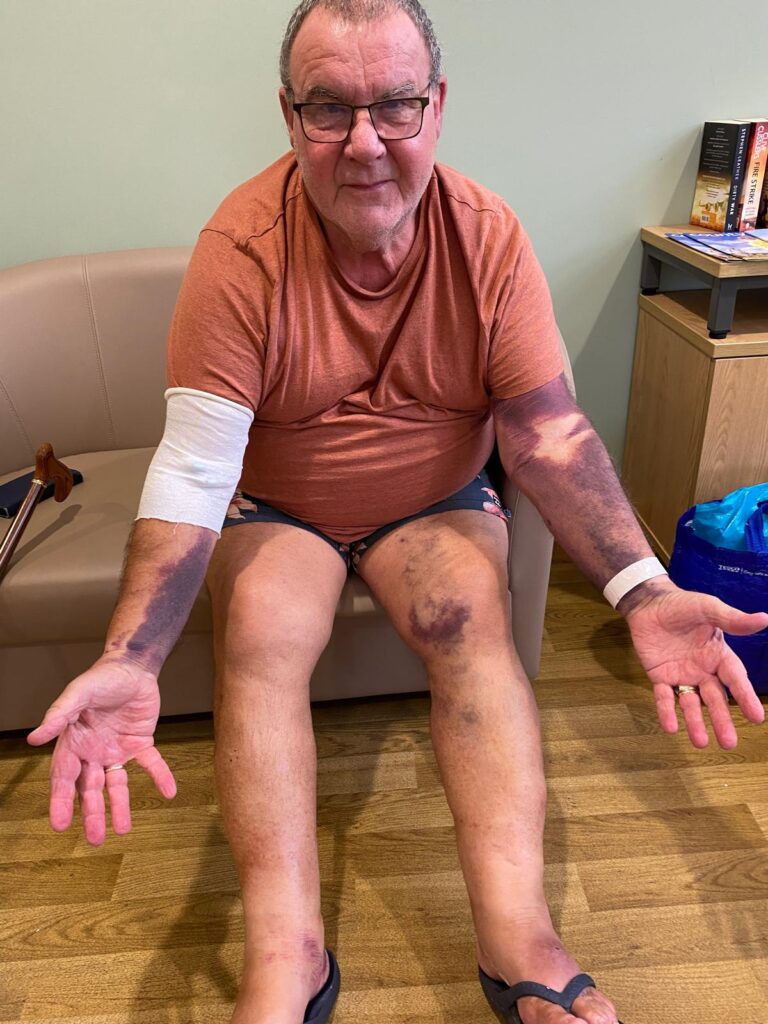
Tim had just turned 74 when he noticed a sharp pain in his left leg. His mystery condition would turn out to be acquired haemophilia, but delays in getting a diagnosis almost proved fatal.
What began as a sharp pain rapidly escalated to extreme bruising, pain and swelling. But despite repeated visits to his GP and Urgent Treatment Centre (UTC) then A&E, Tim and his family felt no one was taking his visibly worsening condition seriously.
Three early blood tests between GPs and UTC had shown up problem markers with clotting, yet he was given a blood-thinning injection during one A&E visit, despite his protests. He was told at hospital that he needed to see a haematologist – and sent back to his GP to get a referral.
Tim, who lives in Lincolnshire, said: ‘We were getting desperate. Every time I went to hospital I had to wait longer and longer. We knew something was very badly wrong – it was obvious from my extensive bruising – but no one would listen to us.’
It took seven weeks for Tim to be admitted to hospital and seen by a haematologist, by which time he was told he was dangerously ill. He was diagnosed with acquired haemophilia, with factor VIII (8) levels of 0.1%.
Acquired haemophilia is not a genetic disorder, it is a serious autoimmune disorder (a system that protects your body from diseases) where the body mistakenly produces antibodies that attack one of its own clotting factors, most often factor VIII.
People with acquired haemophilia would previously have been well, with no history of bleeding, and would have had normal blood clotting tests. It can happen at any age, but it is most common in older adults and in some women who are in late pregnancy or have recently given birth.
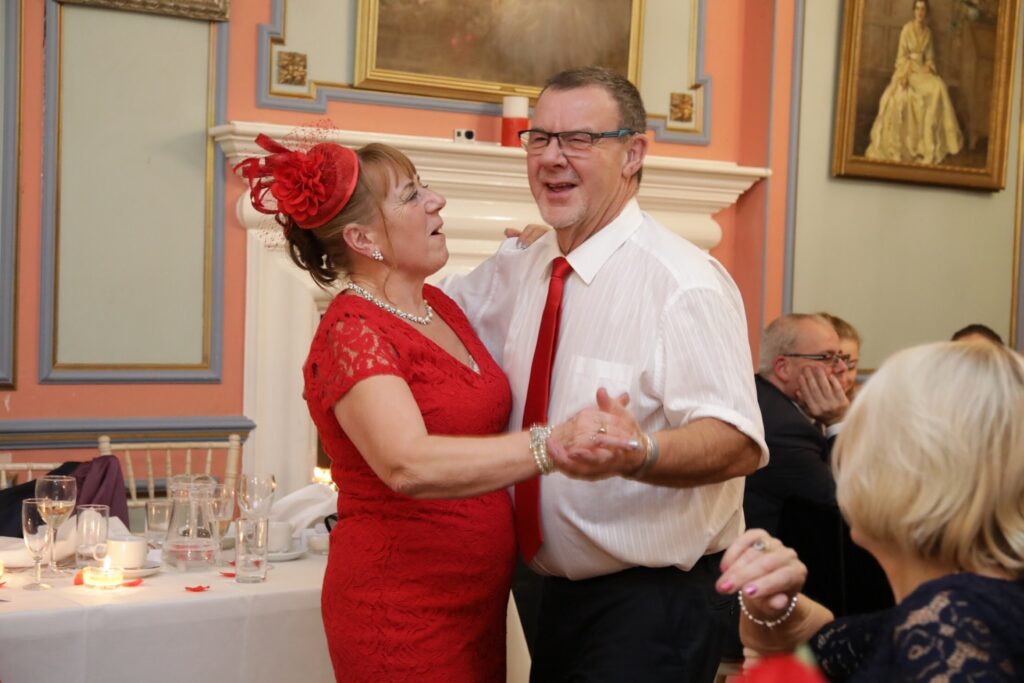
Tim was put on a high dose of steroids and underwent chemotherapy. He keeps factor VIII clotting factor in his fridge in case of an emergency, such as a fall. Now, four months on, his clotting factor had risen to 30% and he is no longer on any treatment for acquired haemophilia. His team thinks it may be more than a year before he is fully recovered, and other medical problems such as potential knee, shoulder and hip surgery, have had to be postponed indefinitely due to the condition.
Tim finds it difficult to walk without support and is exhausted by day-to-day activities with painful joints stifling activities, but he is determined to put this experience behind him.
He said: ‘This is not going to stop me doing anything. Hopefully over time I’ll get fitter and feel better and things should start to improve, my dear wife has become my amazing carer.’
One issue which Tim believes held back his diagnosis was that doctors couldn’t see information from previous visits, GP’s records, tests and consultations between departments, because the various data systems didn’t speak to each other. Since Tim’s diagnosis, there has been work carried out to try to improve access to communications.
Tim said: ‘My advice to anyone who finds themselves in a situation like mine is don’t take no for an answer. Keep going until people start joining up the dots and work out what’s wrong. My local hospital treated me like a pest because I was such a frequent attender, and if my family hadn’t kept on pushing for answers I probably wouldn’t be here today.’