Public Inquiry
Infected Blood Inquiry will close in March
Written by Jessica Bomford, February 25, 2026
The Infected Blood Inquiry will officially come to an end on 31 March 2026, it has been announced.
Sir Brian Langstaff, chair of the inquiry, said that although he understood people would be disappointed by this news, the inquiry had ‘exercised the power it has’ and its job has been done, according to its Terms of Reference.
In a letter to participants, Sir Brian acknowledged the ‘courage of everyone who brought themselves to give evidence to the inquiry’ and added that he wished no one had any need to be part of a public inquiry. You can read this letter and a full explanation about the end of the inquiry here.
This announcement does not affect current or future compensation claims.
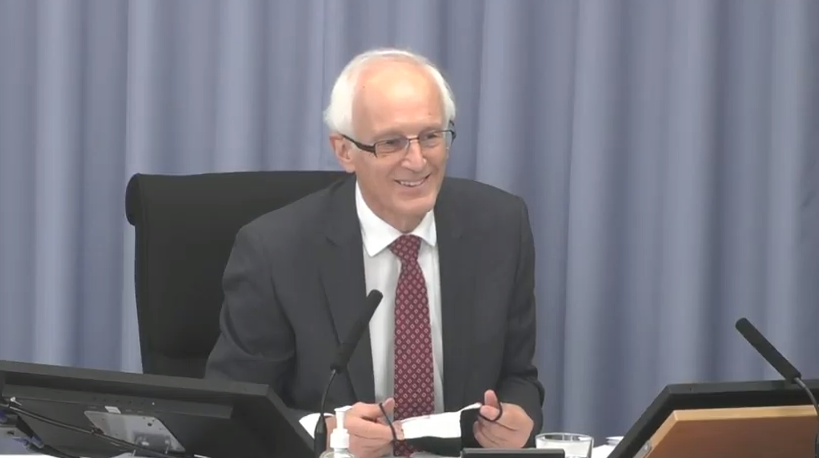
Sir Brian quickly became a respected and trusted figure within the infected blood community. He said from the outset that the voices of those infected and affected by contaminated blood would be at the heart of the inquiry’s work. Sir Brian and his team created a welcoming and safe space and he would often chat to inquiry participants during breaks in inquiry evidence. He was also an astute chair, intervening to ask witnesses searching questions, where appropriate.
Kate Burt, Chief Executive of the Haemophilia Society (THS), said: ‘Sir Brian Langstaff’s compassion, integrity and intellectual rigour have given the infected blood community a true champion. Thanks to the forensic investigations of Sir Brian and his inquiry team, the devastating truth about the contaminated blood scandal was finally told, clearly and irrefutably, bringing recognition of the unimaginable harm done to those infected and their families.
‘As Sir Brian acknowledges, while great progress has been made, there is more work to do to ensure the Infected Blood Compensation Scheme is fair for all and that the inquiry’s recommendations on clinical safety and candour in public life are honoured. We will continue to work to ensure that the inquiry’s legacy is achieved and, most importantly, keep the voices of those infected and affected at the heart of our mission.’
THS Chair, Conan McIlwrath and our President, Clive Smith, added: ‘Sir Brian did what so few in authority have ever done for the contaminated blood community – he listened. He listened with respect to every single inquiry witness, regardless of their role, but he ensured that those who had suffered took first priority, appropriately giving them the first and last words at the Infected Blood Inquiry.
‘Sir Brian and his inquiry team helped to restore trust in a community that had started to lose hope that truth and justice would ever be achieved. We’d like to thank Sir Brian and his team for the truly outstanding way in which this national scandal was investigated and exposed.’
Reflecting on the achievements of the inquiry, Sir Brian said: ‘After careful investigation over five decades of decision-making, action and inaction, the true, horrifying, scale of what happened has been conclusively established. There were systematic, collective and individual failures to deal ethically, appropriately and quickly with the risk of infections being transmitted in blood, with the infections when the risk materialised and with the consequences for thousands of families. This should never be forgotten.’
The inquiry was announced by Prime Minister Theresa May in 2017 and opened the following year, taking evidence from those impacted as well as leading scientists, politicians and clinicians. The inquiry published its main report in May 2024, having published earlier reports in 2022 and 2023 recommending interim compensation payments and the establishment of a full compensation framework. Unusually, Sir Brian kept the inquiry open after publishing its main report and monitored progress, intervening with further hearings in July 2025 following concerns about the Infected Blood Compensation Scheme. Fresh recommendations were made, resulting in changes to the compensation scheme. The government is currently considering responses to its consultation on some of those changes.
The inquiry will transfer all documents disclosed to core participants during the inquiry to The National Archives. If any have been redacted to protect personal identities, this will remain in place. Evidence gathered will be passed to the Cabinet Office so that this material will remain available if any UK police force wants to access it as part of their investigations. The inquiry’s website will remain live.